
The Connected Student-Mental Health
Here, KNOWAtlanta looks at several private schools across the metro area and the various ways that they empower students with tools to support positive mental health. read more

Metro Atlanta’s private schools provide a unique opportunity for parents to invest in their child’s future through stand-out academics, a focused culture, and leadership opportunities that are rare among public institutions. With these advantages in mind, KnowAtlanta Magazine asked representatives from area private schools what makes their institution notable. Here’s what they had to say.
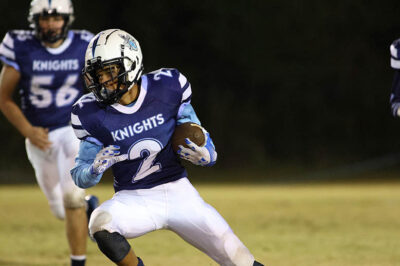 Among its standout academic programs, Dominion Christian School touts its dual enrollment program with a local university, its academic coaching program, and a new lower school which opens next year. The Dual Enrollment Program, in partnership with Truett McConnell University (Cleveland, GA), enables high school students to earn college credit. Most classes are completed online during a supervised study hall, while select courses are taught on campus by qualified Dominion teachers. According to the school, many of its graduates in this program start college as sophomores, saving both time and tuition.
Dominion’s ACCESS program — Academic Coaching Combined with Enriched Student Support — helps students recognize their strengths and weaknesses and develop the strategies and skills needed to meet the expectations of the school, their families, and themselves. “We want families to have ACCESS to a quality private Christian education by providing resources to accommodate different types of learning styles,” says Ed Morris, Dominion’s Head of School.
According to Morris, the culture at Dominion offers a close-knit, family atmosphere where every student is known, valued, and encouraged to grow academically, spiritually, and personally. “We are also committed to making Christian education accessible by offering one of the most competitive tuition rates among private schools in our area,” Morris said.
As far as shaping future leaders, leadership is intentionally woven into the student experience at Dominion. Through the school’s Chick-fil-A Leader Academy, students participate in leadership training, service projects, and hands-on experiences that develop character, teamwork, and servant leadership. “Dominion equips students to become confident leaders who seek to make a positive impact in their communities,” Morris said.

The Galloway School is known as a pioneer in progressive education. The school’s Advancement Coordinator, Ricky Emmons, told KnowAtlanta that students currently are excelling in mock trial, debate, Model UN, All State Chorus and All State Band, and the Scholastic Art Awards.
In the 2025-26 school year, seven Galloway students were recognized as National Merit Commended students, two students were recognized as National Merit Semifinalists, and 15 students received the College Board School Recognition Award. Emmons added that last year, one senior went to the national championship for debate, while this year six students received Alliance for Young Artists and Writers Scholastic Art and Writing Awards.
Academic excellence notwithstanding, what truly sets Galloway apart, Emmons said, is the school’s culture of connection. “As the only non-denominational independent school in the Buckhead area, we welcome families from a wide range of backgrounds. …Our intentionally small student-to-teacher ratio students the confidence to ask questions, share their ideas, and advocate for themselves.”
That translates into leadership qualities the students practice every day. “Along the way, they build confidence, resilience, empathy, and the ability to communicate and lead with purpose,” Emmons said.
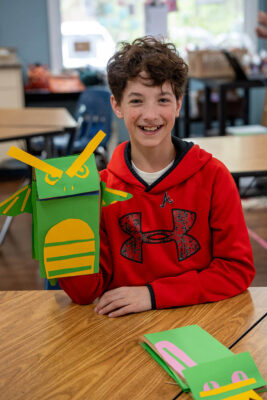 At High Meadows, students experience a culture where curiosity, belonging, and purpose go hand in hand. The school’s philosophy is that children learn best when they feel known, respected, and empowered to take an active role in their own education. To that end, teachers create an environment where questions are encouraged, mistakes are viewed as opportunities for growth, and every student has a voice.
Around the 42-acre campus, students benefit from daily outdoor learning and environmental stewardship and collaborative, project-based experiences. For example, kindergarten students have a new forest learning space called Kat’s Landing, designed to enhance their time spent outdoors. Thus, students develop a deep connection to one another and to the world around them. “The result is a joyful, and intentionally inclusive community where children gain the confidence to be themselves while learning how to contribute meaningfully to others,” Interim Head of School Ben Hebebrand said.
Academically, High Meadows takes an inquiry-based, experiential approach to learning. The goal isn’t simply to prepare students for high school — it’s to prepare them to navigate a rapidly changing world with confidence, purpose, and compassion. According to Hebebrand, one of the school’s most exciting recent initiatives is the Youth Leadership Institute, which gives middle school students meaningful opportunities to develop leadership skills through service, collaboration, ethical decision-making, and real-world problem-solving. “Rather than viewing leadership as a position, students learn to lead through action, empathy, and responsibility — skills that align with our mission of preparing thoughtful, engaged citizens,” Hebebrand said.
High Meadows also expanded its Middle Years mini-courses, giving students opportunities to explore specialized topics beyond the traditional curriculum, such as Inventor’s Workshop and Barnyard Animal Training. These immersive experiences encourage curiosity, creativity, and interdisciplinary thinking while allowing students to pursue interests that may spark future passions.
Finally, building leadership qualities is an expectation for all students at High Meadows. Beginning in the earliest grades, students learn to think independently, collaborate respectfully, communicate effectively, and take responsibility for their decisions. As they grow, they take on increasingly meaningful leadership roles. “Rather than focusing solely on titles or positions, we help students develop the habits that define effective leaders: empathy, resilience, ethical decision-making, adaptability, and the confidence to tackle complex challenges,” Hebebrand said.
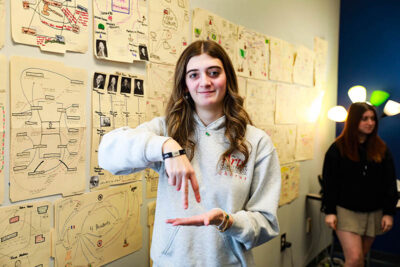 Mount Paran Christian School (MPCS) recently added an American Sign Language (ASL) program to its curriculum, deepening its commitment to expand how students think about communication, Diana La, the school’s assistant director of communications, said. “ASL encourages them to embrace nonverbal communication which is an essential life skill in both personal and professional settings.”
Building upon this, the school prepares students to lead with confidence through a biblical worldview, whether that is in the classroom, on the stage, on the field, or within the community. “Our entrepreneurship class is offered in multiple levels, teaching students how to run a business as they fully operate the Roost Coffee Company on the MPCS campus, which serves staff and students daily,” La said. And through the school’s goLead program, students embrace the role of being servant leaders by volunteering in philanthropic endeavors. Such opportunities allow students to move boldly into the world having confidence in who they are and what they are capable of, La said.
More traditional academics also rank highly among MPCS priorities. The school offers more than 60 AP courses and has a high pass rate of 91 percent, well above the reported national average for such college-prep courses. Further, MPCS reports that this past year, several DECA (Distributive Education Clubs of America) students earned Top 10 finishes in their respective events. And during the Mock Trial season, the MPCS Legal Eagles competed for the state title, making it all the way to the semifinals.
 Since 2014, Pace students and faculty have visited 58 countries and Antarctica. That’s a staggering statistic when you learn that even among the most ardent American travelers (according to the Pew Research Center), only 11 percent have been to more than 10 countries. These Pace explorers participated in the school’s Isdell Center for Global Leadership, which cultivates global competency and leadership capabilities in all three levels at Pace — Lower, Middle, and Upper Schools.
Caitlin Goodrich Jones, Pace’s director of communications, told KnowAtlanta that by exploring an annual global theme — this year Conservation — students in this program build critical-thinking skills they can apply to other issues. Students connect with individuals and experts across the globe through curricular, co-curricular, and hands-on activities; community and global partnerships; leadership fellowships; and domestic and international study tours.
This program alone may be enough to build culture at Pace and certainly shapes the school’s reputation among prospective students and parents, but there is more to Pace. Families point to the tight-knit sense of community as a defining characteristic of Pace culture, Jones said. “We remain small by design to ensure every student is truly known. This intentional size fosters a tight-knit, inclusive community where families and the school work in close partnership to develop the whole child.”
Academically, Pace students consistently excel in local, state, and national competitions. In the Lower School, according to Jones, students compete in the Helen Ruffin Reading Bowl and city-wide chess. Both Lower and Middle School students participate in FIRST LEGO League Robotics — where the Middle School RoboKnights recently won the super-regional Grand Champion and Innovation/Project awards to advance to state.
In the Middle and Upper Schools, students competed and placed well at the 2026 Georgia Junior Classical League convention, the National Latin Exam, and Model UN where Pace’s largest extracurricular team continues to earn top accolades nationwide. “By partnering with families to nurture both intellectual and ethical growth, we ensure our students don’t just learn about the world — they develop the character and cultural fluency to shape it,” Jones said.
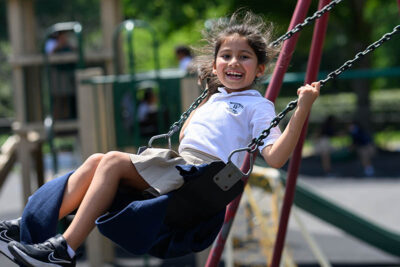 Recent updates to Woodward Academy’s academic programs include expanded interdisciplinary learning opportunities; increased honors level offerings; a debate program for grades four through six; and the implementation of new technologies, such as artificial intelligence, to encourage critical thinking and problem-solving skills that allow students to succeed in an ever-changing global landscape.
At the high school level, Woodward’s nationally ranked debate team is a state champion. The school’s Director of Strategic Marketing & Communications, Amy Zarriello Morris, said students also dominate in robotics; Odyssey of the Mind; the Georgia Mathematics League; science research; the arts; and athletics, including track and field, volleyball, cross country, and basketball. “Academic excellence and character development are the cornerstones of a Woodward education,” she added.
For example, students complete Capstone projects as seniors that challenge them to think divergently and conduct interdisciplinary research, and Middle and Upper School students participate in the Maymester program, where they can pursue unique courses about social entrepreneurship, global studies, the arts, and technology.
“The development of future leaders is at the heart of a Woodward education,” Morris said. “Students are taught to be curious, independent thinkers who have the confidence, competence, and character to serve as leaders in their respective fields and communities.”